Sunny White and Sunny Grey are commercial families tied to Bampokha and Badal trade names—not always separate quarries. Learn how Buner suppliers use Sunny labels, how they differ from Super White, and how to write RFQs that avoid shade disputes.
Trade desks in Malakand Division throw around Sunny White and Sunny Grey as if they were single quarries with GPS coordinates. In practice they are commercial families—colour ranges that Buner suppliers attach to material from Bampokha, Badal, and neighbouring benches. A Dubai trader’s Sunny White may match a Peshawar architect’s Bampokha No.1; a Karachi contractor’s Sunny Grey may be the same stone a factory stamps as Badal grey on crate stencils. Confusion is not dishonesty; it is legacy naming from decades of local trade before export SKUs standardized.
Buyers who write “Sunny White, best quality” on a one-line RFQ invite shade disputes. Buyers who define background tone, vein density, and reference samples get the right bundles. This guide separates Sunny labels from geology, shows how they relate to named SKUs on StoneVaults, and gives RFQ language that survives site inspection.
What Sunny White usually means in Buner
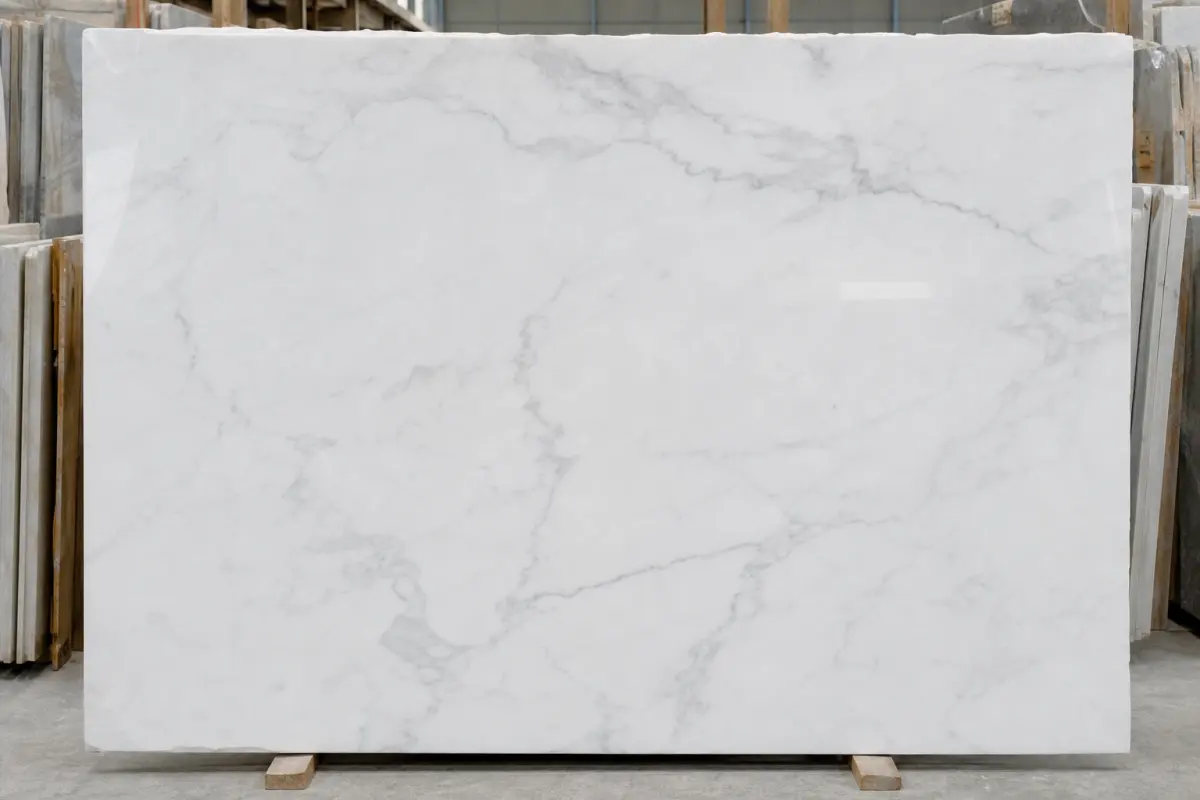
Sunny White historically described bright calcite whites from the Bampokha belt—material with a sunny, warm-white appearance under daylight compared to colder grey-whites. Today it overlaps Bampokha No.1 white and premium selections on polish lines. It is not automatically the same as Super White Buner, which often sits in a higher royalty and sorting band with a cleaner field.
When a supplier offers Sunny White at a discount to Super White, assume grade difference until photos prove otherwise—not necessarily fraud, often commercial second selection or mixed-block bundles.
What Sunny Grey usually means
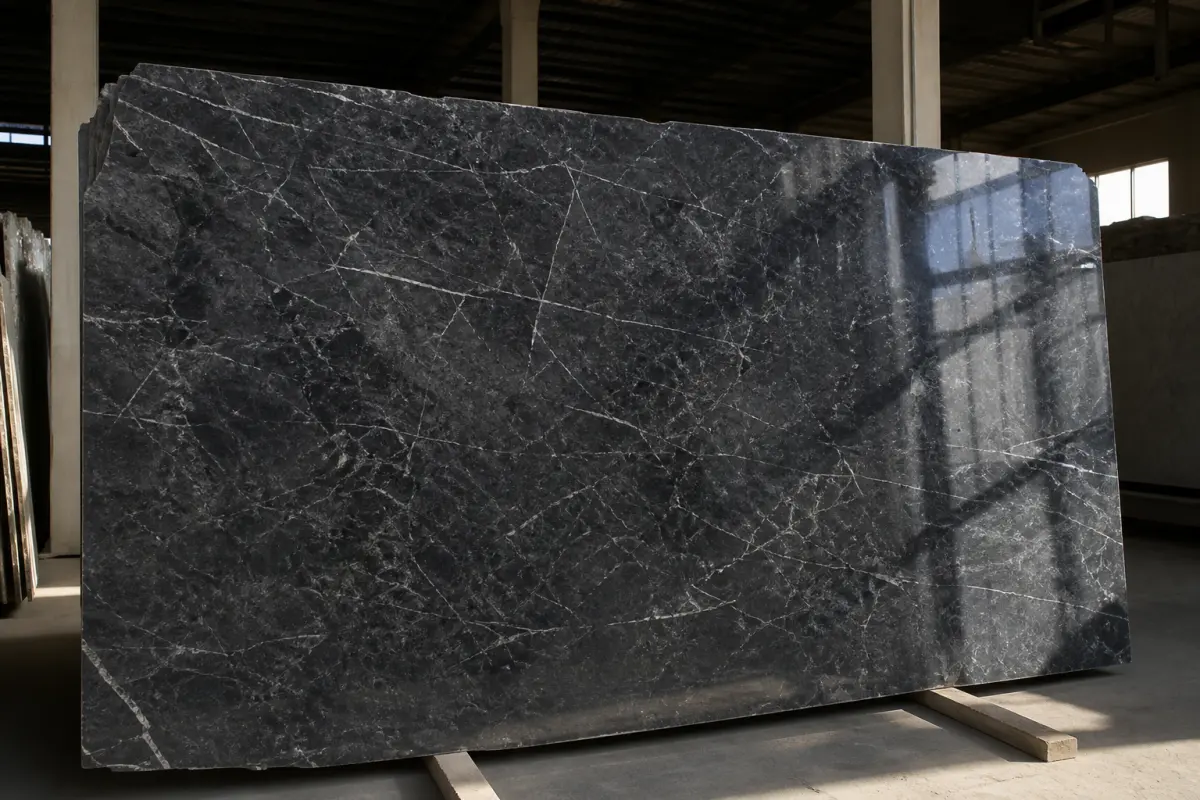
Sunny Grey aligns with grey families sold as Badal-style marble: neutral grey background, lighter and darker clouding, suitable for large floors. Compare live grey inventory on Badal grey marble slabs when your spec says Sunny Grey but your fixer expects Badal— they may already be the same stone under two names.
Why one hill produces both “Sunny” names
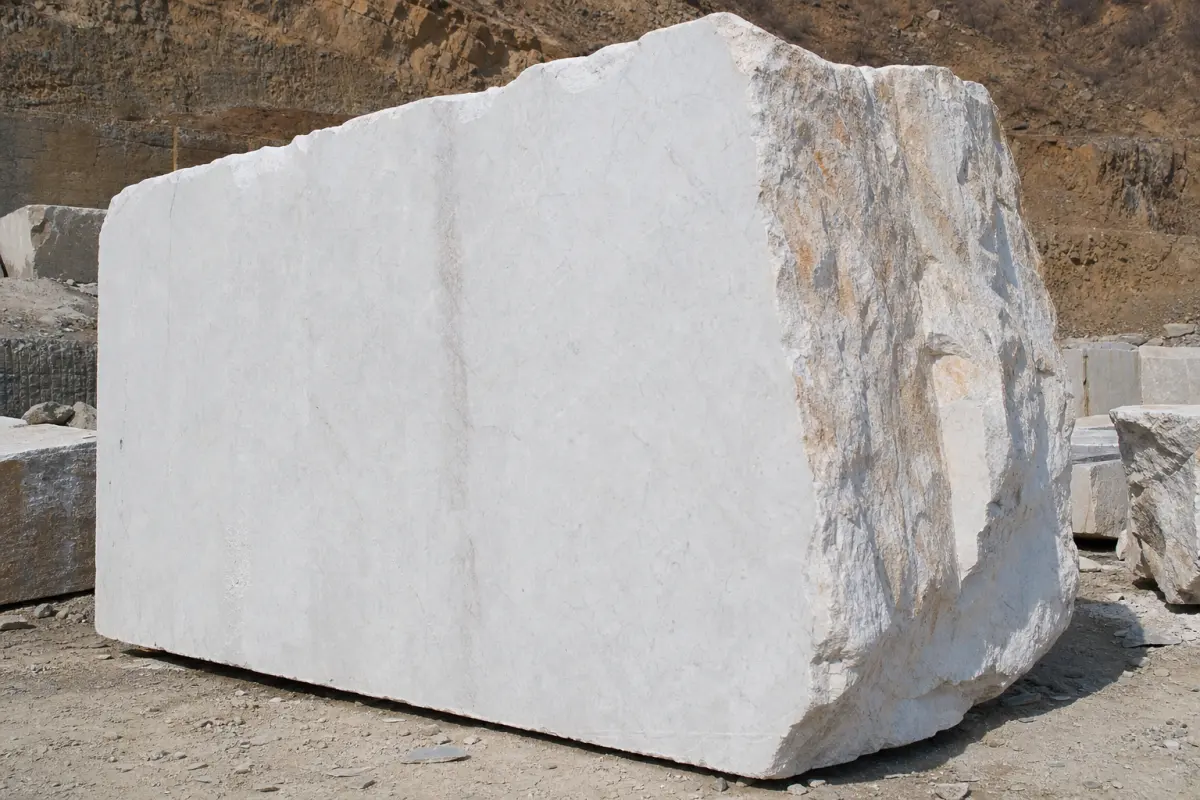
Marble benches change character with depth and strike. A lease can yield whiter material on one face and greyer on another; traders brand each for market habit. Wire-sawn extraction reduces mixing; blasting can blur bench identity in the block pile. Extraction context from quarry blasting versus wire saws helps explain sudden colour jumps in a container.
Common buyer mistakes
- Using Sunny White and Super White interchangeably on contracts without sample approval.
- Ordering Sunny Grey for a lobby that was mock-upped in Badal first selection—tighter clouding than commercial Sunny Grey allows.
- Ignoring tax and power pass-through on mill quotes—factories price selection labour differently as sales tax phases in and power hours shrink.
- Approving phone photos taken under yellow warehouse bulbs instead of project lighting.
RFQ language that works
Replace vague Sunny labels with measurable intent: reference slab SKU or attach master sample photo; state allowed vein percentage and background L-star range if you use colour tools; list application (lobby slab vs corridor tile); require bundle sequence photos from one block for continuous spaces.
On the StoneVaults marketplace, publish RFQs naming both trade name and target SKU so suppliers map Sunny White to Bampokha or Super White explicitly in their bid.
Quick reference for spec writers
Sunny White ≈ Bampokha-family bright white, verify grade against Super White if budget allows premium sorting.
Sunny Grey ≈ Badal-family grey, verify clouding tolerance for large floors.
Always tie commercial names to photos, thickness, and finish—not folklore repeated from an old BOQ.
How factories label bundles internally
Behind the Sunny marketing names, Torwarsak mills often mark bundles with block numbers, shift dates, and polish-line codes. Export customers rarely see those marks until crates arrive—request stencil photos before sealing. Traders who rebundle slabs retag commercially; that is legal but destructive to continuity if your hotel wing needed single-block flow.
Super White commands premium sorting labour on the line; Sunny White commercial may include more clouding without being mislabeled if your RFQ never defined cloud limits. Write cloud limits.
Historical naming and export evolution
Decades ago, Sunny labels helped local traders distinguish Bampokha brightness from colder greys in oral trade. Global buyers now want SKU links like Bampokha No.1 on invoices. Use Sunny names when speaking with legacy Mingora dealers; use SKU names when drafting LCs and architect schedules—translate between them with signed samples.
Dispute prevention on mixed containers
When a container mixes Sunny Grey corridors and Sunny White lobbies, separate purchase order lines and crate lists. Customs and client inspectors count bundles by line item; vague “Sunny mixed” descriptions cause payment holds. StoneVaults RFQs that split lines by SKU reduce this friction automatically.
Training your site team on names
Architect schedules should use one naming system—preferably SKU plus approved sample ID—and a glossary for contractors who still say Sunny on site. Store sample boards in project offices with both names written under the same chip: “Sunny White / Bampokha No.1 / Sample SV-104.” That single habit prevents most substitution arguments during final inspection.
When to escalate from Sunny to Super White
Upgrade when the owner brief demands minimal vein under strong lobby lighting, when royalty-inclusive budget allows premium sorting, or when your competitor’s reference photo is clearly Super White class. Stay on commercial Sunny or Bampokha No.1 when square-metre count is huge and shade bands are wide—trying to buy Super White grade at Sunny prices produces either refusal or quiet downgrade.
Retail showrooms in Islamabad and Karachi often display Sunny-labelled samples cut years ago—always re-sample from current factory bundles before national rollout. Colour drift across decades of mining is normal; names stay stable longer than geology.