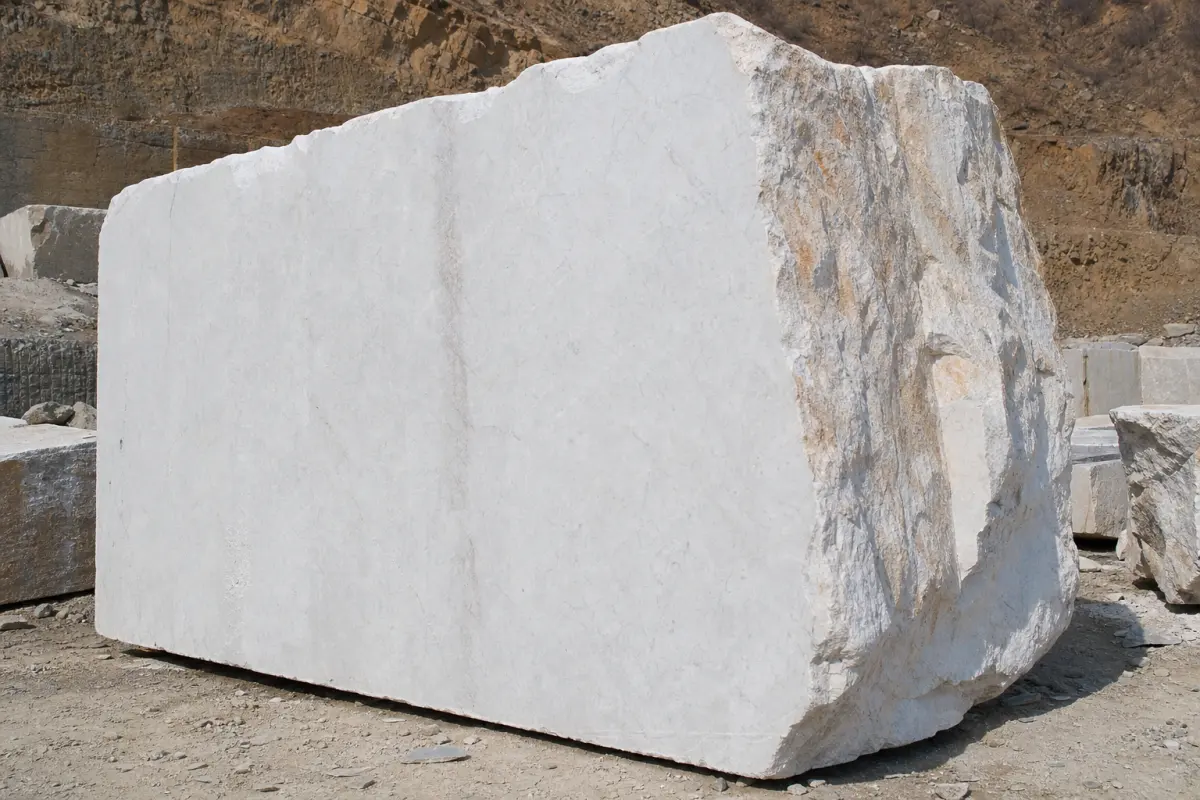
Finish changes how Buner and Swat marble reads in light and performs in traffic. This product guide explains polished, honed, leather, and bush-hammered treatments for Pakistani calcite marbles—where each works, what factories charge, and what to specify on RFQs.
Gulf architects often specify “polished marble” and stop typing. Factory owners in Torwarsak then guess grit sequence and head count. The result is a lobby that shines like a mirror—or a floor that shows every sand particle because someone honed when you wanted polish. Pakistani marble finishes follow the same physics as Italian or Indian stone; what differs is equipment age, dust control, and whether the supplier uses the word “leather” to mean a branded texture or random belt sanding. This guide aligns vocabulary between buyers and Buner–Swat mills.
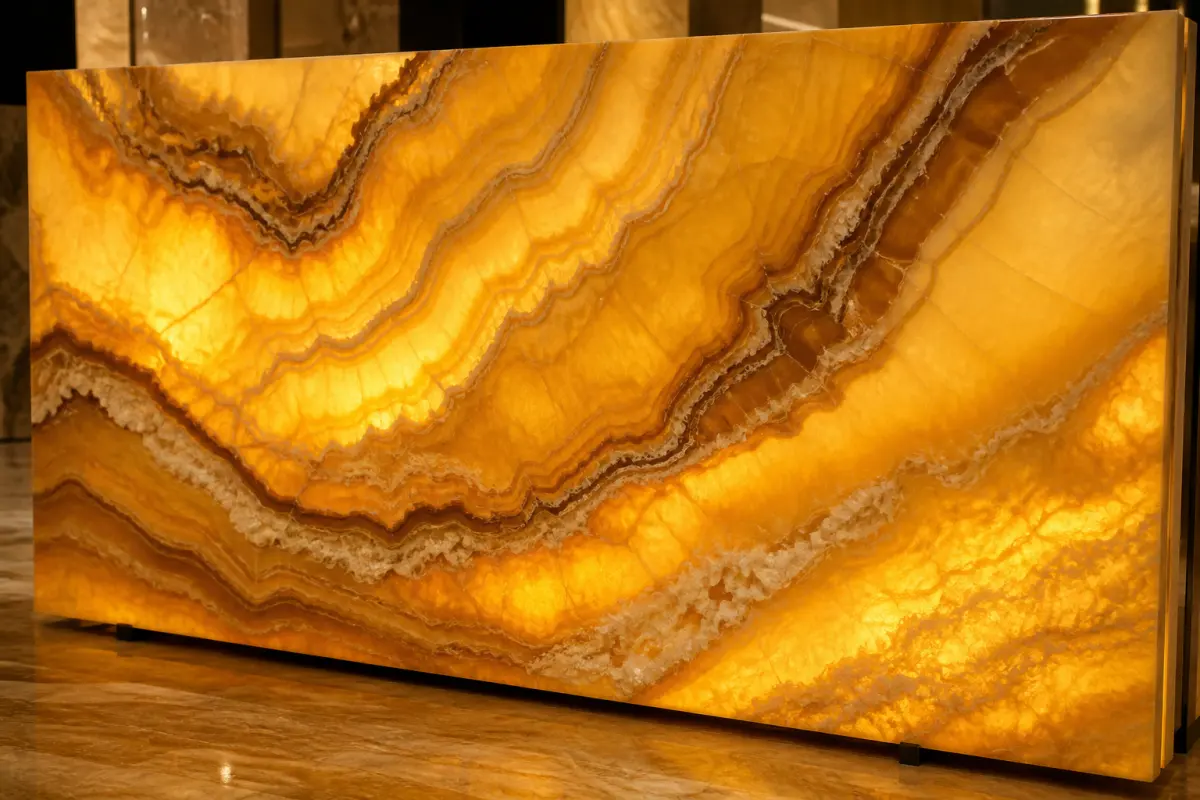
Calcite marbles—Bampokha, Super White, many Swat whites—polish brightly but scratch and etch more easily than quartzite. Finishes are therefore a performance spec, not only an aesthetic one. Onyx and softer decorative stones need gentler head pressure. Always pair finish choice with maintenance advice for humid or coastal GCC sites.
Polished (mirror) finish
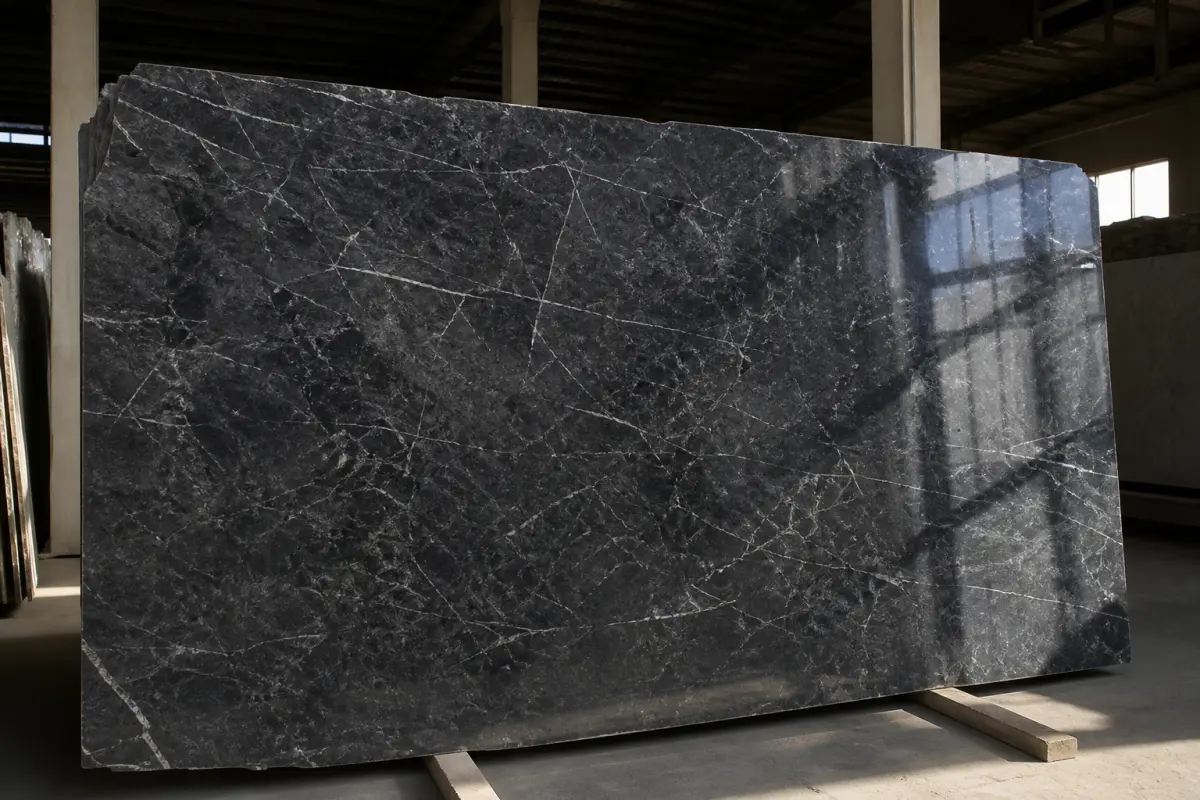
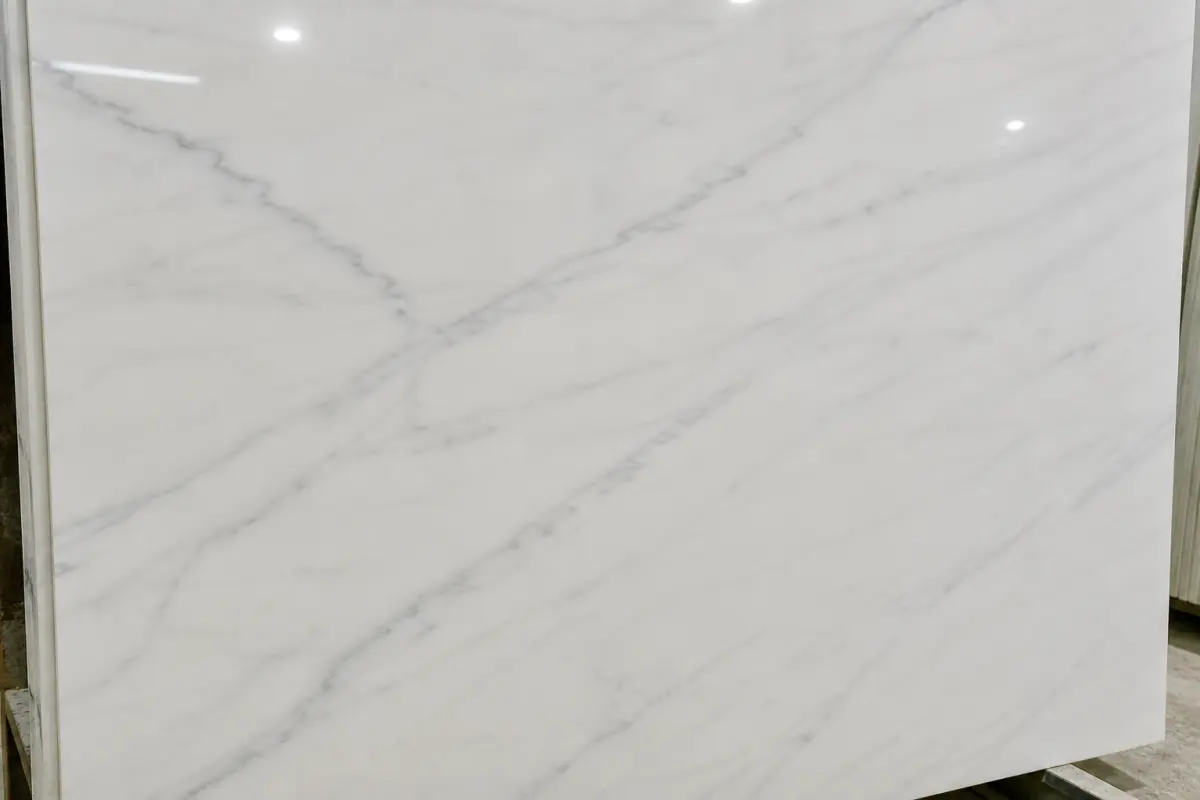
Polished is the default export SKU for Bampokha No.1 slabs: progressive diamond pads to 3000+ grit on automatic lines where available. Spec mirror reflectivity with a sample, not adjectives. Ask head count (six versus eight versus twelve) and whether resin fill preceded polish. Polished shows vein beauty and pinholes after fill—ideal for lobbies, elevators, and feature walls when maintenance budgets exist.
Outdoor polished marble in hot climates is usually a mistake unless the project accepts rapid gloss loss and cleaning cost. Pakistani suppliers price polished as baseline; honing or leather may be upsells—confirm on PI.
Honed finish
Honed stops at lower grit—matte, soft, less reflectivity. Good for bathrooms, spa zones, and floors where glare and slipperiness matter. Honed hides minor scratches better than polish but shows staining if sealers fail. Northern factories achieve honest honing when lines are calibrated; verify on a sample larger than a hand tile.
Compare honed Pakistani whites to honed Indian competitors on the same BOQ using our India–Pakistan comparison—finish must match before price compare.
Leather (antique) finish
Leather texture uses brushes or synthetic pads to leave a subtle, tactile surface—popular on grey and beige programmes. In Pakistan the term is not standardized; some job shops mean light honing plus brushing, others mean aggressive belt texture. Provide a reference photo or physical sample from a prior project. Badal grey programmes often use leather in hospitality corridors where polish would show foot traffic.
Bush-hammered finish
Bush-hammering pits the surface mechanically for slip resistance and rustic appearance—common on exterior cladding and plaza paving, less on interior lobby slabs. Not every Buner shed owns a bush-hammer machine; subcontracting adds lead time. Specify pattern density and test slip ratings if your consultant requires them.
RFQ language that prevents disputes
- Name finish, grit or process reference, and reference sample ID.
- State indoor vs outdoor use and maintenance regime.
- Require pre-shipment finish panel sign-off on first container.
- Document whether edges are polished, chamfered, or raw-sawn.
Factories that publish SKUs on StoneVaults reduce guesswork—browse the marketplace and attach finish notes to RFQs. Pair with the Buner supplier guide when auditing polish lines on site. Finish is where cheap quotes become expensive callbacks; specify it like thickness, not like decoration.
Combined finishes and edge treatments
Projects often mix polished lobby slabs with honed elevator floors from the same block run. State combination clearly on POs so factories schedule pad changes and avoid polishing the wrong bundle. Edges—pencil round, bevel, mitre—are separate line items; Pakistani job shops excel at cut-to-size when bridge saws are maintained.
Maintenance by finish in Gulf climates
Polished calcite etches from acidic cleaners common in hospitality turnover. Honed and leather finishes hide etch better but need impregnating sealer renewal. Bush-hammered exteriors collect dust in Gulf sandstorms—cleaning schedules belong in owner manuals. Provide finish-specific care sheets to clients; suppliers who skip this invite callback disputes mistaken for “bad marble.”
Quality control at the polish line
Walk a Torwarsak line and watch for burned spots from excessive head pressure, uneven gloss from worn pads, and premature polishing before resin cure. Reject bundles at factory gate when finish fails handheld gloss meter checks agreed in contract. First-time buyers should budget one inspection day; repeat buyers rely on photo sign-off per container.
Lighting and finish perception
Polished Pakistani whites look different under warm Gulf downlights versus cool office LEDs. Send finish samples to your project’s lighting designer before container commit. Honed surfaces shift less under lighting change—another reason spa zones specify honed while lobbies specify polish. Document approved viewing conditions on sign-off forms to prevent disputes at installation.
Factory equipment limits
Not every shed runs twelve-head automatic lines; some stop at six-head semi-automatic with manual slab handling. Finish quality caps at equipment level—asking mirror polish from a tired six-head line guarantees variation. Match finish expectations to audited equipment or pay premium at a larger mill. Product guides like Badal grey specs pair with finish notes on RFQs for complete specification.
Anti-slip and hospitality codes
Gulf hospitality projects sometimes require documented slip resistance for lobby floors. Polished marble may fail those tests; honed or leather finishes may pass with correct sealer. Involve your stone consultant before architects lock polish everywhere. Pakistani suppliers can meet code when finish is specified early—not when containers are already polished to mirror gloss.
Book-match and vein-match requests interact with finish: polished reveals vein continuity; honed softens mismatch. Specify both finish and layout pattern on RFQs so Torwarsak lines do not polish before you approve book layout from dry-laid photos.