Buner hosts roughly 500 of Malakand Division’s ~700 marble factories, yet most overseas buyers still buy through Karachi middlemen. This guide maps quarry-direct marble suppliers in Buner, what Bampokha and Torwarsak factories actually sell, and how to RFQ slabs and blocks without losing margin.
If you search for marble suppliers in Buner, you will find dozens of WhatsApp numbers and a handful of outdated trade-directory listings. What you will not find, in most cases, is a clear line from the quarry face at Bampokha or Nanser to the gangsaw shed in Torwarsak or Swari—and then to your container yard in Karachi or Jebel Ali. That gap is exactly why buyers overpay: the same Buner white that leaves a marble factory Buner cluster at a competitive ex-mill rate often picks up two or three margins before it is photographed for an architect’s sample board.
Buner is not a single “supplier.” It is a district-wide processing belt in Malakand Division, Khyber Pakhtunkhwa, where KPBOIT and industry associations have long cited roughly 500 marble factories out of about 700 in the division—often linked to a majority share of Pakistan’s finished marble tonnage. Commercial names travel globally: Bampokha Sunny White and grey variants, Buner Carrara-type whites, Nanser jet black, and material from Chamla and Chagharzai. Your job as a buyer is to identify which node in that chain actually controls inventory: lease holder, block trader, gangsaw owner, or polish-line jobber.
Where marble suppliers in Buner actually sit on the map
Quarry leases cluster in the hills—Bampokha, Nanser, Kabal sub-district, and approaches toward Chamla. Processing concentrates on valley roads where three-phase power, water, and truck access exist. Torwarsak and Swari are the names buyers hear most often because factory density is visible from the road: wire-saw frames, gantry cranes, and stacks of raw blocks waiting for blade time. Elai and Chagharzai feed the same ecosystem with white and grey families. None of this replaces a site visit, but it tells you what to ask before you wire a deposit.
Factory types fall into a few buckets. Block processors run gangsaws and sell uncut slabs or half-slabs to job shops. Integrated units saw, resin-treat where needed, polish, and pack for export. Traders occupy office fronts in Mingora or Peshawar while subcontracting sawing to Torwarsak—perfectly legitimate, but not “quarry-direct” unless they show lease papers and block marks. For import-grade work, insist on seeing slab photos tied to a block number, thickness call-out (2 cm vs 3 cm), and whether edges are mesh-backed.
Maskini and nearby villages host smaller job shops that finish vanity tops and mosque panels for regional contractors—useful for mixed-size domestic work, less so for strict export repeat SKUs. When a supplier says “our factory is in Buner,” ask for the union-council name and a video pan from the gangsaw to the stockyard. Traders in Karachi’s Saddar or Hub stone markets may still source from the same Torwarsak line; your savings appear when you contract the mill directly and separate forwarding from fabrication.
Colours and products worth sourcing from Buner factories
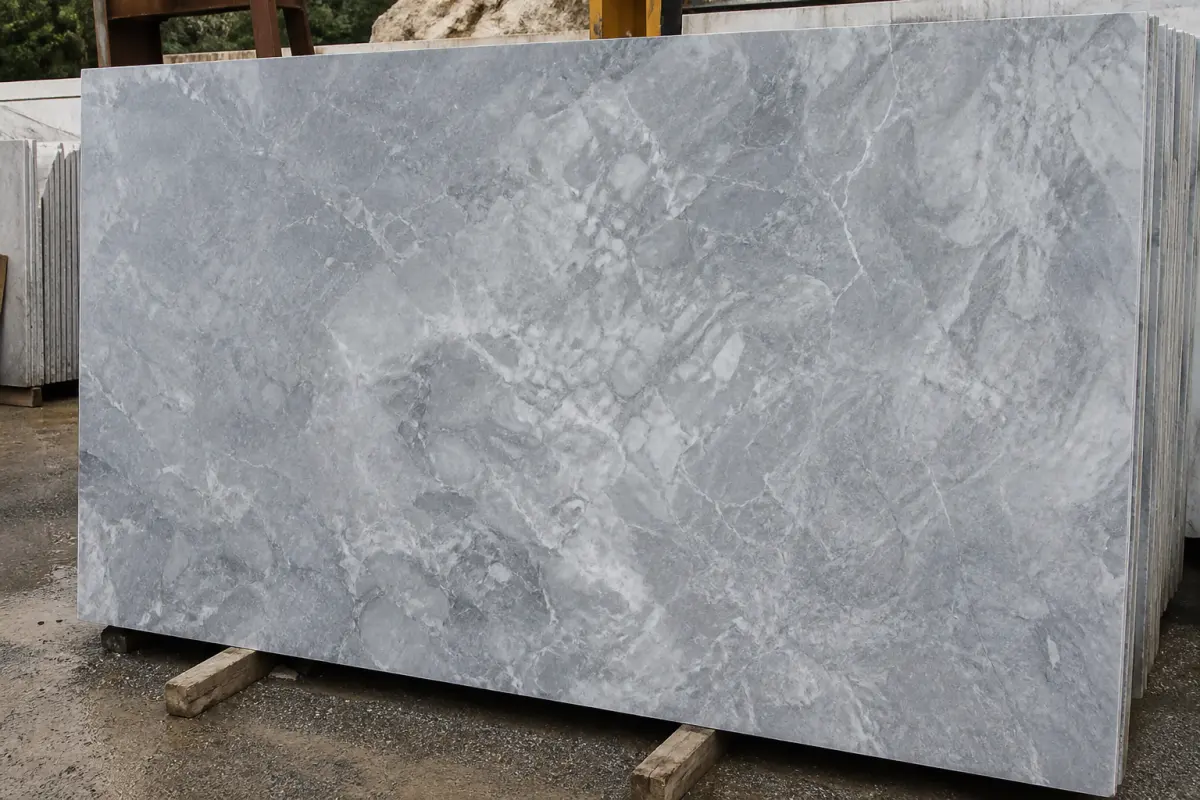
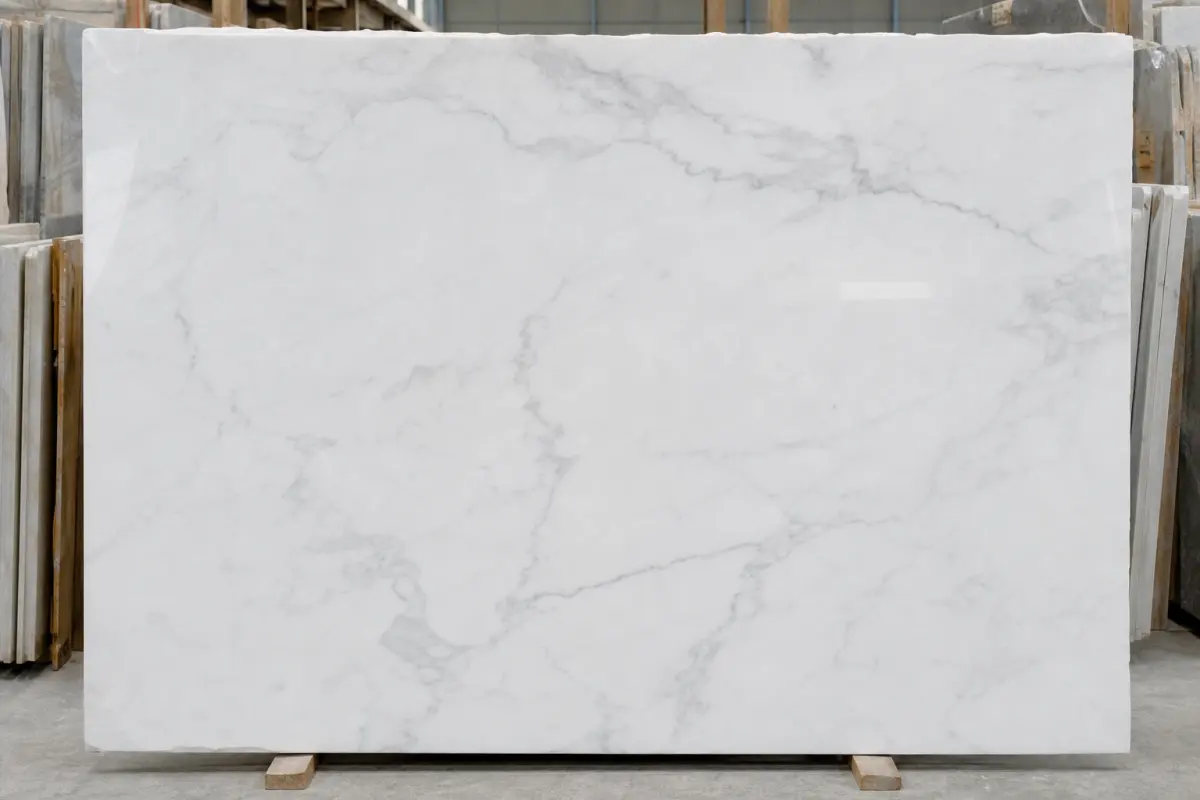
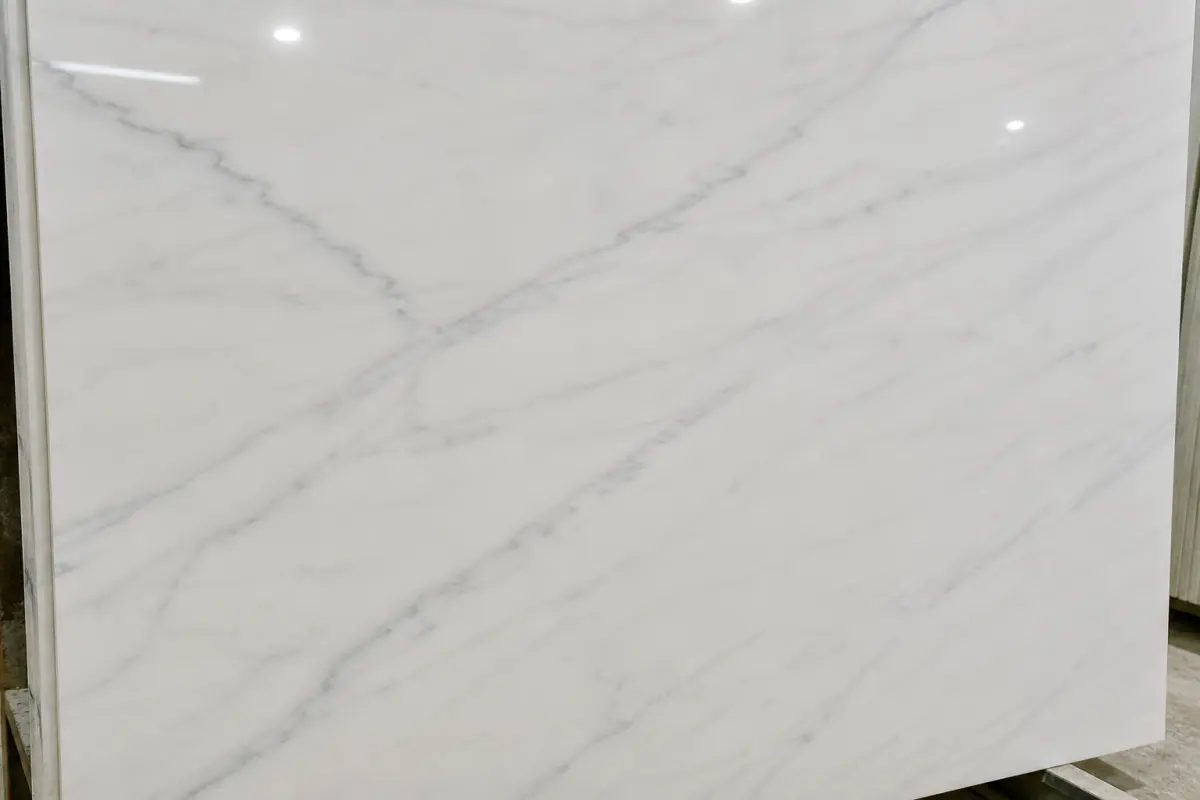
White and grey marbles dominate export conversations. Bampokha No.1 white remains the reference SKU for many Gulf and South Asian projects: clean background, manageable veining, predictable polish. Super-white and Carrara-type selections from the same belt compete on brightness and price. Grey Badal-style material offers a lower per-square-metre option for large flooring programmes. Black from Nanser suits vanity and feature-wall lots where small quantity and high contrast matter more than homogeneous container volume.
Blocks still move in volume to China, the Middle East, and domestic cutters. If your programme is monument, tomb, or thick architectural work, a raw block RFQ from a Buner supplier can beat slab pricing—provided you accept quarry variation and sorting risk. Tile lines (for example 60×60 cm) appear where factories added bridge saws and line polishers; confirm calibre and bevel before you lock a hotel package.
How to buy from a marble factory Buner without blind risk
Start with documentation, not charm. Ask for NTN, sales-tax registration status (the cluster moved off the old PATA goods-tax holiday—see our Buner factory tax research for context), and whether invoices will be FBR-compliant for your bank. Request photos of the actual slab bundle with a date stamp, not stock art. For blocks, ask for dimension list, specific gravity if available, and whether the material was wire-sawn or blasted—blasting still dominates many faces and affects yield.
Logistics are part of the product. Most Buner factories deliver to Mingora or Peshawar trucking points; export packing often happens in Karachi or at a forwarder in KPK. Clarify who shrink-wraps, who builds A-frame crates, and who pays for breakage in transit to port. Electricity remains a real constraint: load shedding and transformer queues shape night shifts and delivery dates. Our note on electricity and load shedding in Buner marble factories explains why a “two-week” promise may slip in peak summer.
Export buyers should also plan around provincial royalty and lease compliance—the same governance topics covered in industry research on the cluster. A factory quoting CIF without naming the loading point (Karachi Port Qasim vs Karachi dry port) is leaving ambiguity that becomes cost at clearance. For architects specifying Buner white tiles alongside slab cladding, confirm one supplier or two: tile calibre and slab shade may not match unless sorted from the same block run.
Marble factory Buner: pricing signals that matter in 2026
Ex-mill quotes move with block cost, blade hours, mesh and resin, and the rupee. After the end of the broad PATA goods-tax holiday, compliant factories pass through sales tax on supplies—another reason rock-bottom WhatsApp prices may omit what your letter of credit requires. Compare quotes on identical thickness and finish, not “best white available.” Ask whether polishing is six-head or eight-head and whether honing is priced separately. Black and premium whites from Nanser and top Bampokha selections carry quarry premiums; grey Badal-style material may win BOQs where colour uniformity across 5,000 square metres matters more than brightness.
Relationship matters, but data matters more on repeat programmes. Keep bundle photos, invoice numbers, and container seal records so your second project does not renegotiate shade from scratch. Many successful Gulf importers maintain one primary marble factory Buner partner and one backup in Swari to hedge power and blade downtime.
- Verify factory location (Torwarsak/Swari vs trader office elsewhere).
- Match commercial name to quarry origin (Bampokha, Nanser, Chamla).
- Specify thickness, finish, and tolerance before price compare.
- Use third-party inspection or video walk-through for first orders.
- Align payment milestones with sawing progress, not verbal assurances.
StoneVaults: RFQ marble suppliers in Buner in one workflow
StoneVaults lists verified Pakistan suppliers with slab SKUs, block listings, and structured RFQs—so you compare Buner and wider KP stone without juggling twelve chat threads. Filter by material, publish quantity and port, and let factories that actually run gangsaws in Torwarsak bid. Whether you need a container of white slabs or a mixed block lot for a Mardan or Karachi project, start on the marketplace and attach your BOQ; suppliers that cannot meet spec self-filter out.
Buner’s scale—hundreds of marble factories on one district’s roads—is a strength if you treat it like a supply chain, not a lucky find on social media. Map quarry to saw to pack, cross-check tax and power realities, and use platform RFQs to keep quarry-direct pricing honest. That is how marble suppliers in Buner earn repeat export business in 2026 and beyond.