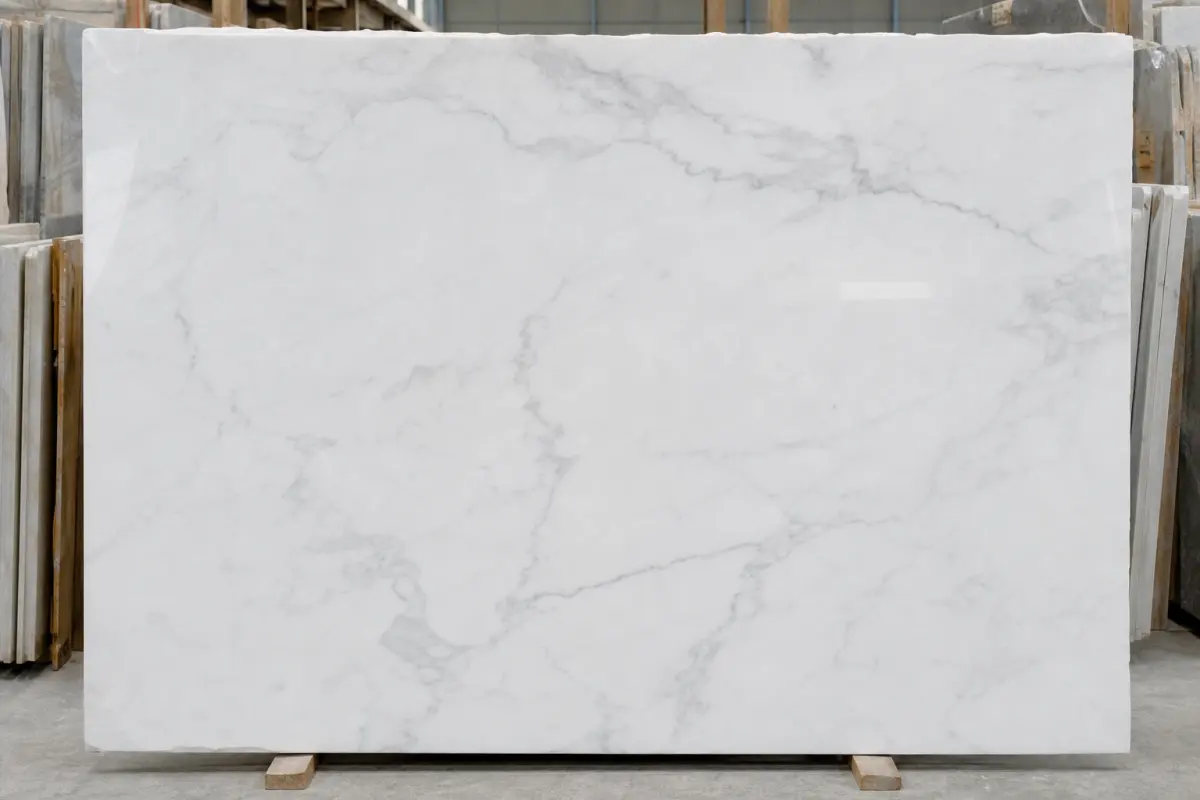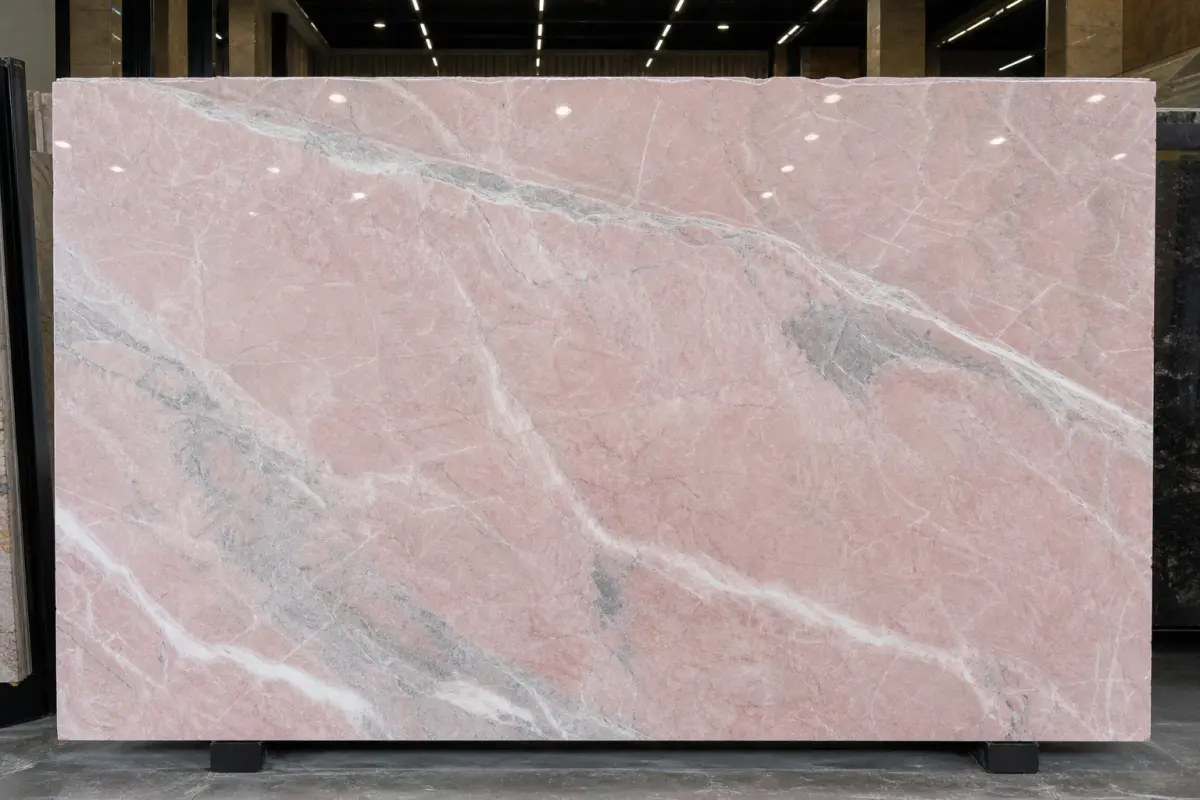
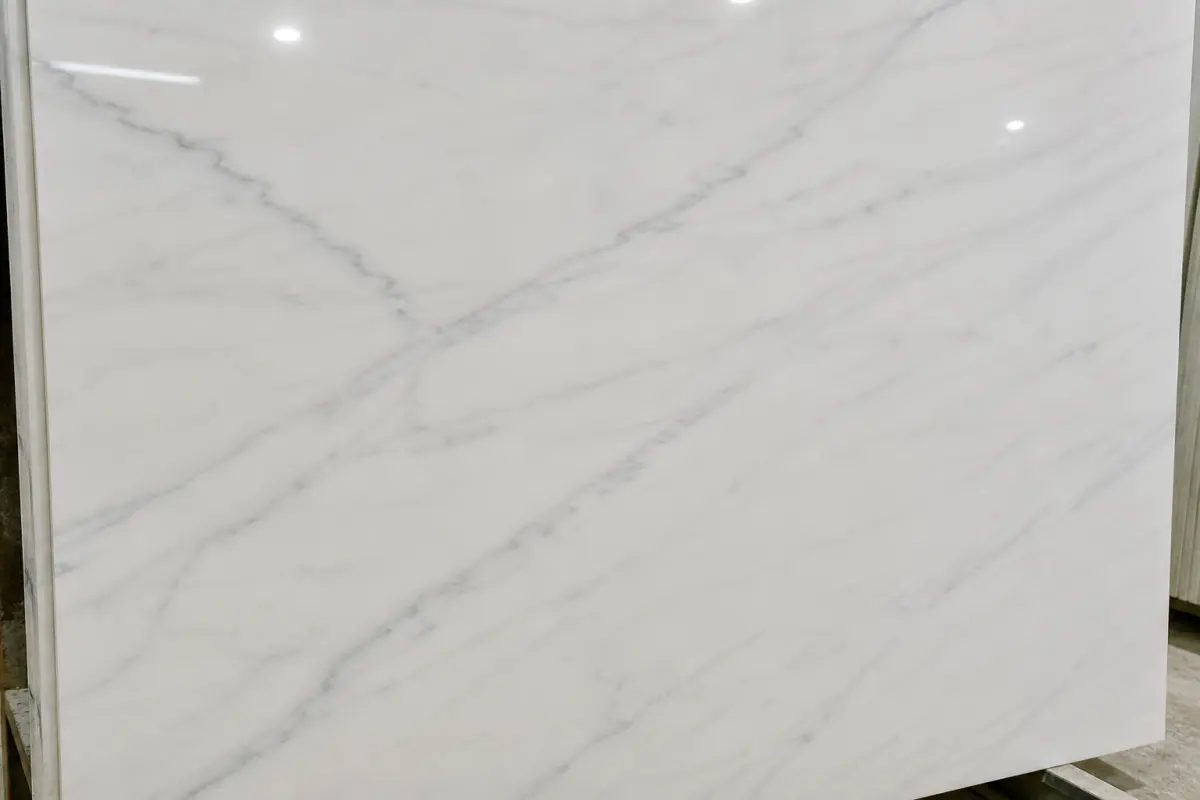
Marble price in Pakistan in 2026 is not one number—it is a stack of quarry grade, factory finish, tax pass-through, and Karachi port math. This buyer guide breaks down what Buner and Swat ex-mill ranges look like versus imported Italian and Turkish stone on a landed basis.
If you ask three traders for marble price in Pakistan on the same Monday in 2026, you may hear three numbers that are all “true” and all incompatible. One quote is ex-quarry block for a blasted Bampokha face. Another is polished two-centimetre slab from a Torwarsak line with mesh and resin included. The third is CIF Jebel Ali for imported Carrara that never touched Malakand Division. Buyers who compare those figures without a spec sheet overpay or walk away thinking local stone is chaos. It is not chaos—it is layered pricing that finally reflects tax, power, and honest grade names after the PATA goods-tax transition.
This guide unpacks marble price Pakistan 2026 for the belts that matter most to export and large domestic programmes: Buner’s factory corridor, Swat’s Mingora-linked mines, and imported whites that still compete on hotel sample boards. We quote in ranges and drivers, not fake fixed rupee lists that expire when the exchange rate moves or a transformer fails in Swari.
What drives ex-mill marble price in Buner today
Buner remains the density leader—industry associations still cite on the order of five hundred marble factories in the district against roughly seven hundred in Malakand Division. That scale keeps blade labour and polish competitive, but it does not guarantee the lowest number on WhatsApp. Ex-mill slab pricing starts at block cost: super-white and top Bampokha selections sit above ordinary white and well above grey families like Badal. Royalty tiers in Khyber Pakhtunkhwa already encode that hierarchy; factories pass it through whether or not the trader mentions it.
Processing adds the next layer. Two-centimetre polished export slabs from gangsaws with six- or eight-head polishers carry different overhead than half-slabs sold to job shops. Resin fill, mesh backing, and bundle sorting for No.1 versus commercial grade move quotes by double-digit percentages on the same block run. Compare like-for-like on Bampokha No.1 white slabs and Badal grey slabs only after thickness, finish, and allowed repair area match.
Tax is no longer a footnote. Federal sales tax on erstwhile PATA industrial supplies phases toward eighteen percent; FY 2026–27 invoices at twelve percent on many inputs and outputs are real. Our Buner factory tax research maps the schedule so you do not treat a compliant factory quote like a 2019 tax-holiday flyer. Power is equally concrete: load shedding and transformer queues shift saw hours—see electricity and load shedding in Buner marble factories—and rush premiums appear when your container cut-off is fixed.
Typical 2026 price bands (indicative, ex-mill Buner)
- Grey marble (Badal-style commercial): often the lowest per-square-metre band for large floor programmes—think budget towers and mall corridors where shade movement is acceptable.
- Standard white (Bampokha commercial / No.1 mix): mid band; first-selection No.1 white runs premium within the white family.
- Super white and bright export selections: top local white band before you jump to import.
- Black and decorative (Nanser-type black, pink fancy, honey onyx): priced per slab or small lot; per-square-metre comparisons mislead when volumes are tiny.
- Raw blocks: priced per ton or cubic metre at quarry or block yard—often better for monument and re-export cutters if you accept sorting risk.
These bands move with rupee, diesel, and blade diamond cost. Request dated quotes and tie revision clauses to block delivery month.
Swat marble price versus Buner: when geography changes the stack
Swat marble price conversations often duplicate Buner because blocks and slabs cross the Mingora–Malakand corridor daily. Swat-branded material may saw in Torwarsak; Buner blocks may trade through Mingora offices. Price differences then come from lease cost, haul distance, and whether the supplier owns polish capacity or subcontracts. PASDEC-era planning figures for Swat—on the order of roughly 2,340 million tons marble in regional summaries—support long-term supply narratives but do not set today’s slab rate. Your RFQ should name extraction district and saw plant, as in our Swat supplier guide.
Distinctive Swat colours (greens, banded whites) may not have a Buner twin; sample-led pricing beats catalogue guesses. For bright white programmes that must match Gulf specs, many buyers benchmark Super White Buner against Swat offers to keep continuity—details in Super White vs imported Carrara.
Import marble price landed in Pakistan
Imported Italian Carrara, Calacatta-style stones, and Turkish dolomites arrive with ocean freight, insurance, port handling, and clearance. Landed per-square-metre often exceeds factory-direct Buner white on paper for large projects—until you add brand value, owner specification, or shade continuity only an Italian bundle mark delivers. Compare total landed cost including inland haul to Lahore, Islamabad, or Karachi site, not FOB Genoa alone.
Exchange rate and letter-of-credit fees swing import stacks more violently than ex-mill KPK quotes in some quarters. Domestic projects that once auto-specified import now value-engineer to local white with architect approval—a trend that supports Buner local versus imported flooring analysis.
How to RFQ marble price honestly on StoneVaults
Publish thickness, finish, square metres, grade tolerance, and destination city or port on the StoneVaults marketplace. Attach a reference photo. Ask suppliers like Zeex Naturals to declare ex-mill, ex-warehouse Karachi, or FOB Karachi explicitly. Cross-read wholesale MOQ and Incoterms before you lock payment. Pair pricing diligence with quarry method notes from blasting versus wire saw so low block prices do not become high waste at the saw.
Domestic contractors in Peshawar and Mardan often pay trucking-only premiums without port layers—still specify whether quotes include sales tax and crate packing. Re-export buyers from UAE may compare Buner ex-mill plus freight against their current Indian or Omani supply; document shade approval to avoid a second container of “corrective” white.
When value engineering, run parallel quotes on Buner white tiles versus slab for corridors; tile lines add cutting and calibre cost that slab-only RFQs hide. Block buyers should browse raw block listings and price sawing separately if your programme cuts overseas.
Marble price in Pakistan 2026 rewards buyers who buy a documented stack—quarry grade, mill finish, tax, power, packing, and haul—not the lowest voice note in a group chat. Use structured RFQs, keep batch-one district guides (Buner suppliers, Dir granite context) open beside your spreadsheet, and revise budgets when tax phase-ins or fuel adjust—That is how serious importers and architects stay ahead of the market this year.