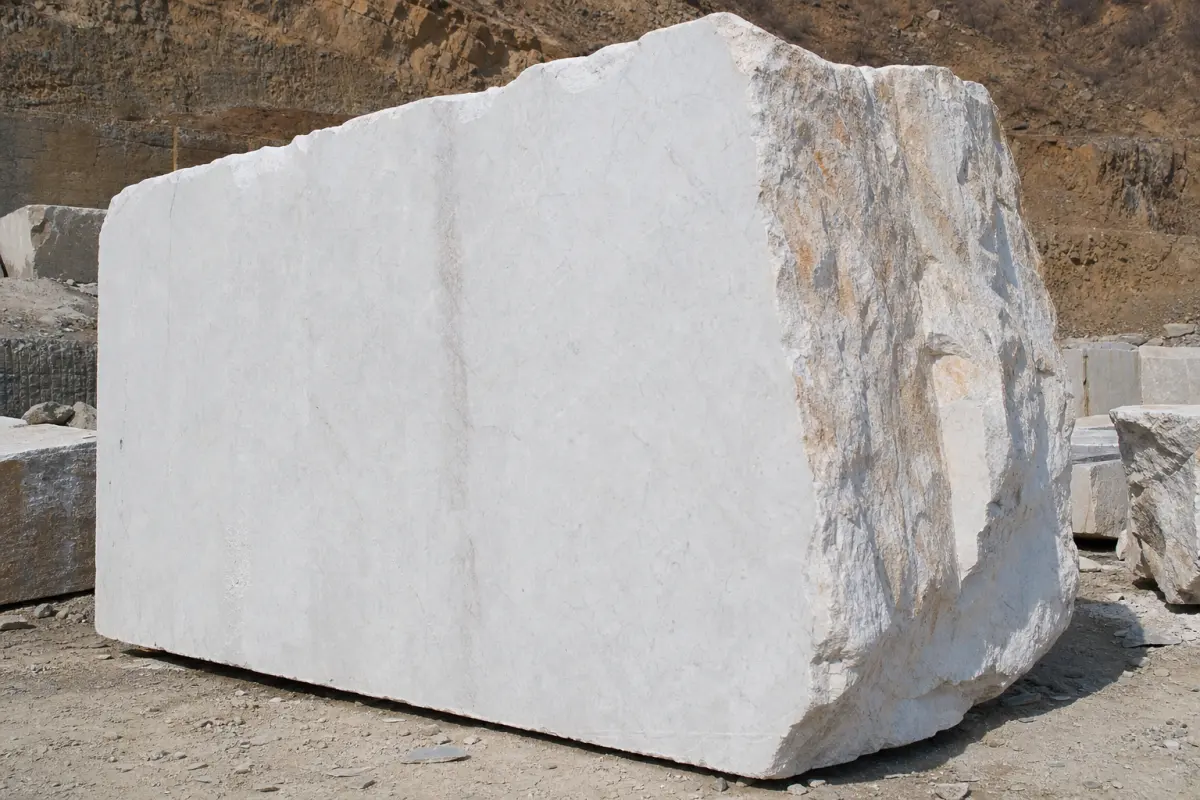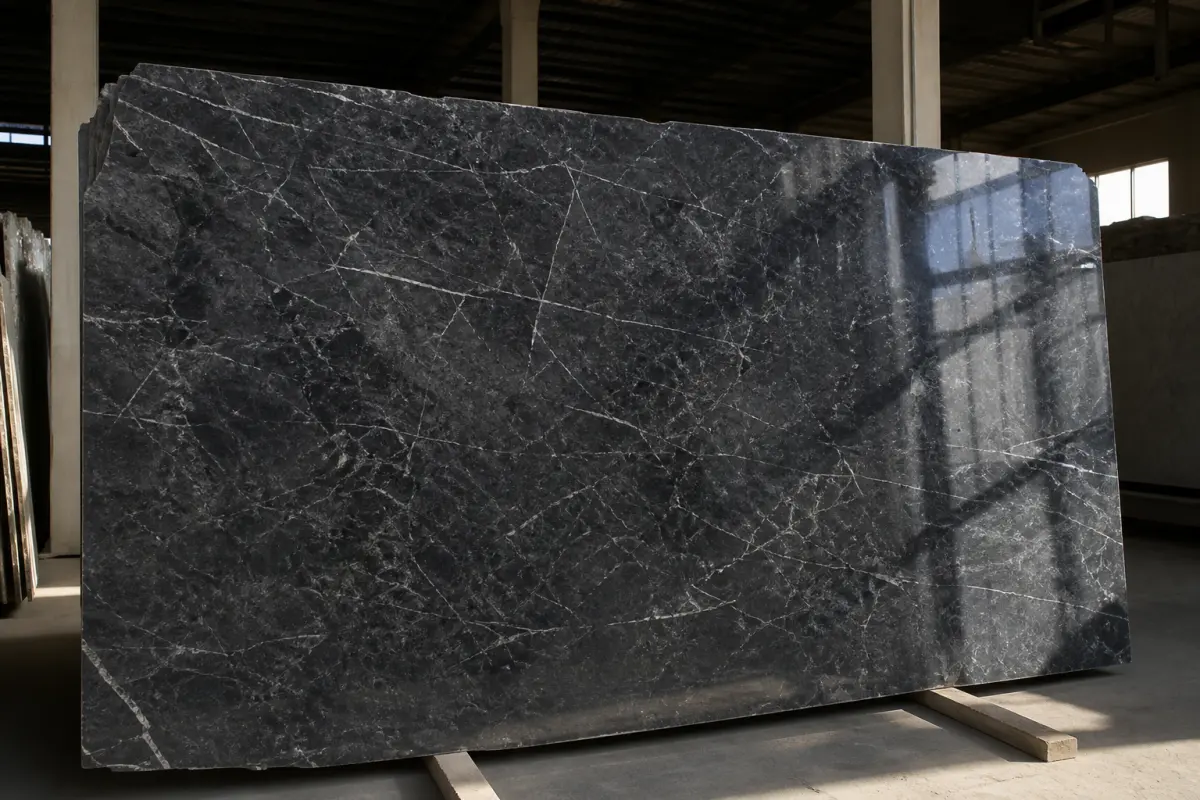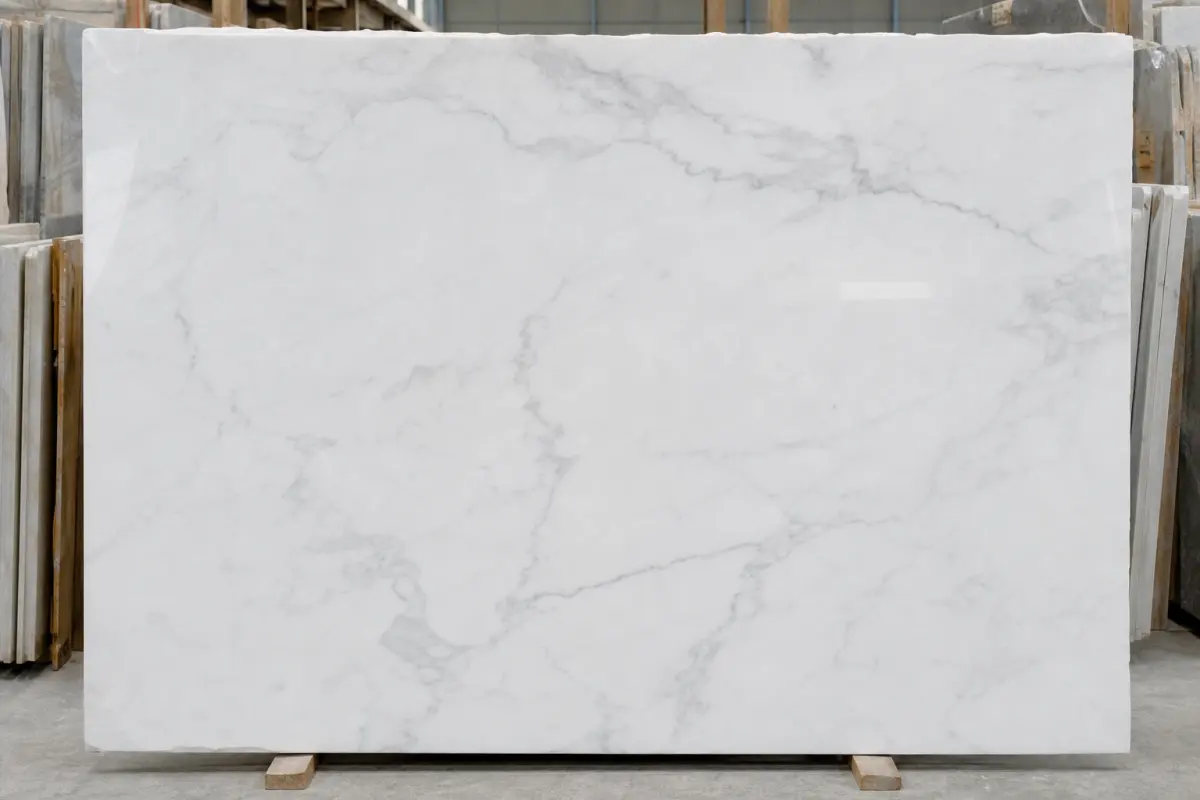
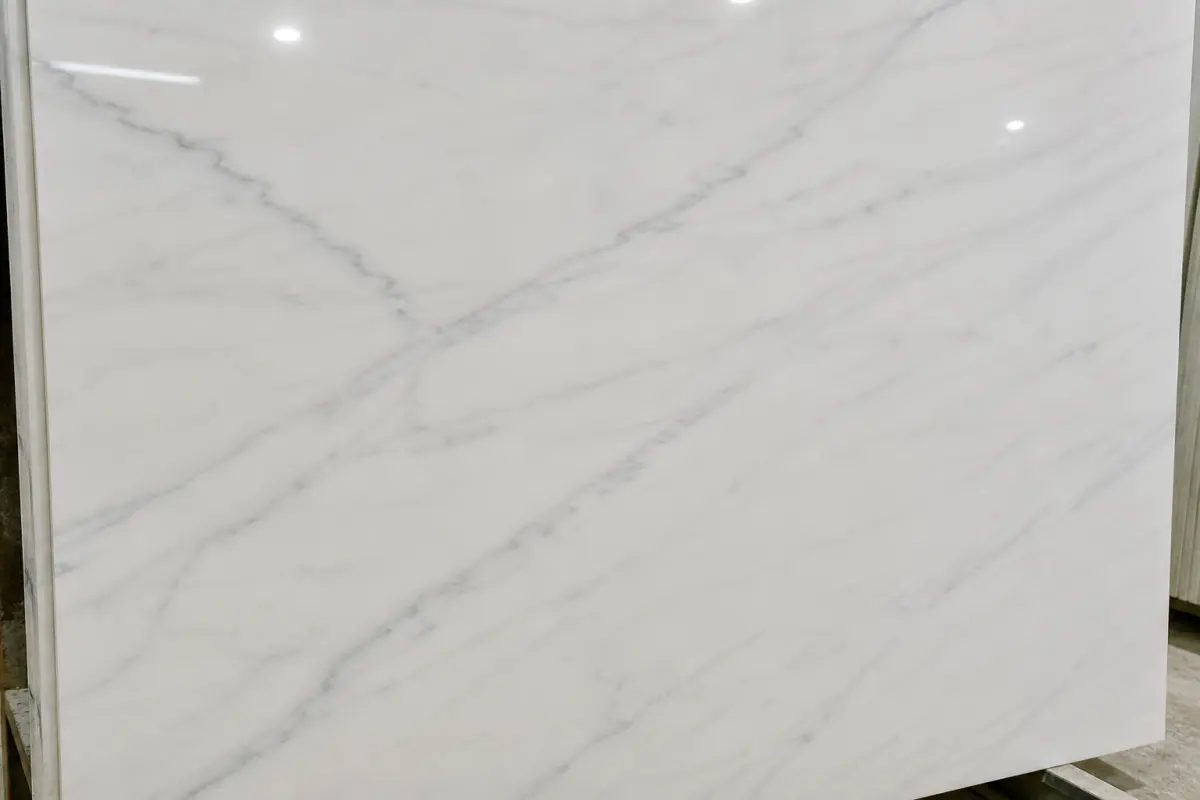
Bampokha white—often spelled Pumpoo on quarry invoices—is the commercial name buyers attach to Sunny White marble from Buner’s Bampokha leases. This guide explains origin, No.1 vs commercial grades, how suppliers grade and pack, and where architects use it.
Walk into a Torwarsak gangsaw shed and ask for white marble, and someone will hand you a sample labelled Bampokha, Pumpoo, or simply “No.1 white.” The three names describe overlapping material from the same hill system in Buner District, Khyber Pakhtunkhwa. Geologists map it as part of the Malakand marble belt; traders map it as the SKU that keeps Gulf hotel lobbies, Pakistani mosque courtyards, and export containers moving. If you are sourcing for a project that must stay bright under halogen light, understanding Bampokha marble grades matters more than chasing the lowest per-square-metre WhatsApp quote.
Pumpoo is not a separate quarry on most lease maps—it is the local pronunciation and old trade spelling that stuck on weighbridge tickets and export packing lists. Overseas buyers who search “Pumpoo marble” and domestic buyers who say “Bampokha” often want the same thing: a white background, grey or gold veining in controlled bands, and a polish that reads clean at two centimetres. Super-white selections that pay higher provincial royalty sit at the top of that ladder; commercial lots with more pinholes or colour movement fill budget programmes. Neither is “fake” marble—both are geology plus sorting.
Where Bampokha white marble comes from
Bampokha leases rise above the factory belt that runs through Swari, Torwarsak, and Elai. Blocks descend by truck to gangsaws that may sit ten kilometres from the face—a normal distance in Buner, where processing clustered where power and water existed long before wire saws reached every face. Material from the same lease can show slightly different veining depending on bench height and whether the face was wire-sawn or blasted. Our quarry research on blasting versus diamond wire tools in Buner explains why two blocks with the same commercial name can yield different slab recovery.
Royalty schedules in Khyber Pakhtunkhwa already price “super white” marble higher than ordinary white. That is one reason suppliers segregate Bampokha No.1 early: the tax line on the invoice follows the stone. Buyers who treat all white as one grade will mis-budget both royalty pass-through and the sorting labour at the polish line.
Grades buyers actually see on the slab bundle
Factories rarely use a single national standard; they use bundle marks and buyer-specific tolerances. Still, patterns repeat across Torwarsak suppliers.
- No.1 / first selection: Uniform white field, limited veining, minimal pitting after resin fill where applied. Common export SKU for Bampokha No.1 white slabs.
- Commercial / second: More colour movement, occasional clouding, acceptable for large-floor programmes where borders and furniture breaks hide variation.
- Super white / premium: Brighter background, often cross-shopped against Super White Buner and Carrara-type imports on price and look.
- Block grade: Sold as raw marble blocks for importers who cut in their own country or for thick architectural work.
Always align grade language with a physical sample or bundle photo. A supplier’s “No.1” may match your architect’s “commercial” if neither side wrote down shade bands.
Suppliers: who sells Bampokha marble in 2026
Supply chains split three ways. Lease holders and block dealers sell quarry-side or at Torwarsak block yards. Gangsaw factories sell half-slabs, polished slabs, and sometimes tiles cut from the same block. Mingora and Peshawar traders aggregate lots from multiple sheds—useful for small quantities, harder to trace for repeat export programmes unless they disclose factory GPS and block numbers.
Tax and power shape supplier behaviour today. Federal sales tax on erstwhile PATA industrial supplies is no longer zero; factories rebuilding price sheets may quote “on request” more often than in 2024. Read our Buner marble factory tax research before you assume ex-mill numbers from old catalogues. Load shedding still steals saw hours; see the note on electricity and load shedding in Buner marble factories when scheduling container cut-offs.
Uses: where Bampokha white earns its keep
Interior flooring and wall cladding dominate domestic and Gulf demand. Two-centimetre polished slabs are the default export pack; three-centimetre appears in stair treads and high-traffic lobbies. Exterior use is possible in mild climates with correct fixing and drainage, but soft calcite marbles need honest maintenance advice—sealing, cleaning chemistry, and joint design.
Vanity tops and reception desks use the same material at smaller sizes; here No.1 selection pays off because users stare at the surface at arm’s length. Monument and mosque work in Pakistan often buys blocks or thick slabs locally rather than imported Carrara, both for cost and for shorter overland logistics from Buner to Punjab or Sindh sites.
How to buy Bampokha (Pumpoo) marble without grade drift
Specify thickness, finish, shade tolerance, and allowed resin repair. Ask whether the lot was sawn from wire-cut or blasted blocks. Request packing photos with A-frame crates and slab IDs. For first containers, tie payment milestones to sawing and polish completion, not verbal promises at a Mingora showroom.
StoneVaults lists Bampokha-family SKUs with structured RFQs on the marketplace, plus dedicated raw block browsing when your programme starts at the quarry rather than the polish line. Compare No.1 slab listings with Super White alternatives if your spec allows a slightly brighter or quieter vein pattern—side-by-side RFQs keep suppliers honest on grade names.
Quick answers for spec writers
Is Pumpoo marble the same as Bampokha? In trade practice, yes—Pumpoo is the older spelling and local name for material quarried in the Bampokha area and sold as Bampokha white internationally.
Does Bampokha replace imported Carrara? For many budget and timeline-sensitive projects, yes, with sample approval. Carrara still wins where brand specification is fixed; Bampokha wins on landed cost and supply from Pakistan’s densest processing cluster.
Where do I start sourcing? Open a marketplace RFQ with your thickness and square-metre target, attach a reference photo, and shortlist factories that show actual bundle inventory—not recycled stock images.