Sixty-by-sixty centimetre marble tiles from Buner factories fill hotel, mosque, and residential floor programmes. Learn standard thickness, polish and hone options, calibre rules, and how mills price tile lines versus slab export.
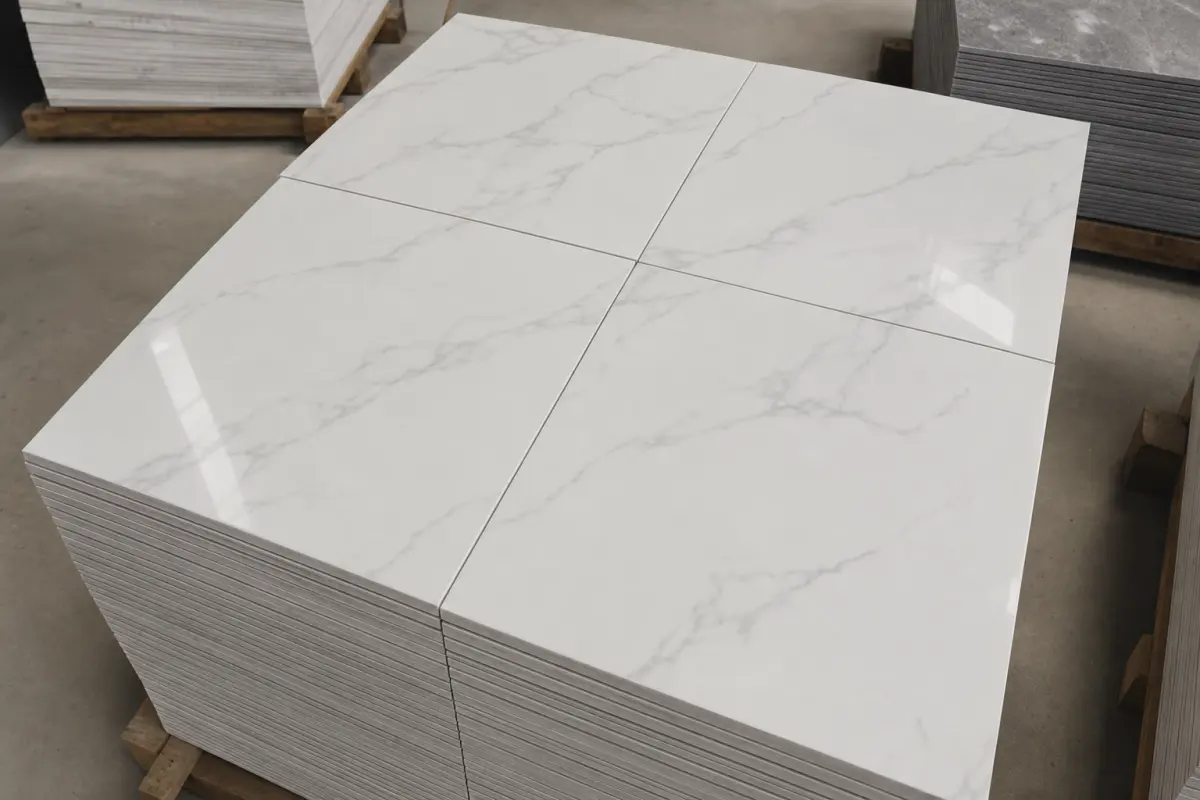
Buner marble tiles 60×60 cm are how much of Pakistan’s hospitality and high-end residential flooring actually gets installed—not giant slabs on every floor. Factories along Torwarsak and Swari added bridge saws, tile lines, and line polishers to chase domestic BOQs that specify calibrated formats, bevelled edges, and packing in corrugated cartons on pallets. Export conversations still skew slab-heavy, but Gulf and African buyers increasingly ask for 60×60 white and grey from the same Bampokha and Badal families they already know in two-centimetre slab form.
Tile pricing looks simpler than slabs until you unpack calibre, thickness tolerance, shade sorting, and the factory’s opportunity cost when a polish line could run export slabs instead. This buyer guide explains what “standard” means in Buner for 60×60 tiles, how finish choice affects line setup, and why two quotes with the same square-metre rate can mean different products entirely.
Thickness and physical spec
Common export and domestic specs centre on 10 mm and 12 mm thickness for 60×60 floor tiles, with some programmes at 15 mm or 20 mm when structural demand or subfloor conditions require it. Always write thickness tolerance—±0.5 mm on a disciplined line versus ±1 mm on a job shop is the difference between a clean lay and lippage fights on site.
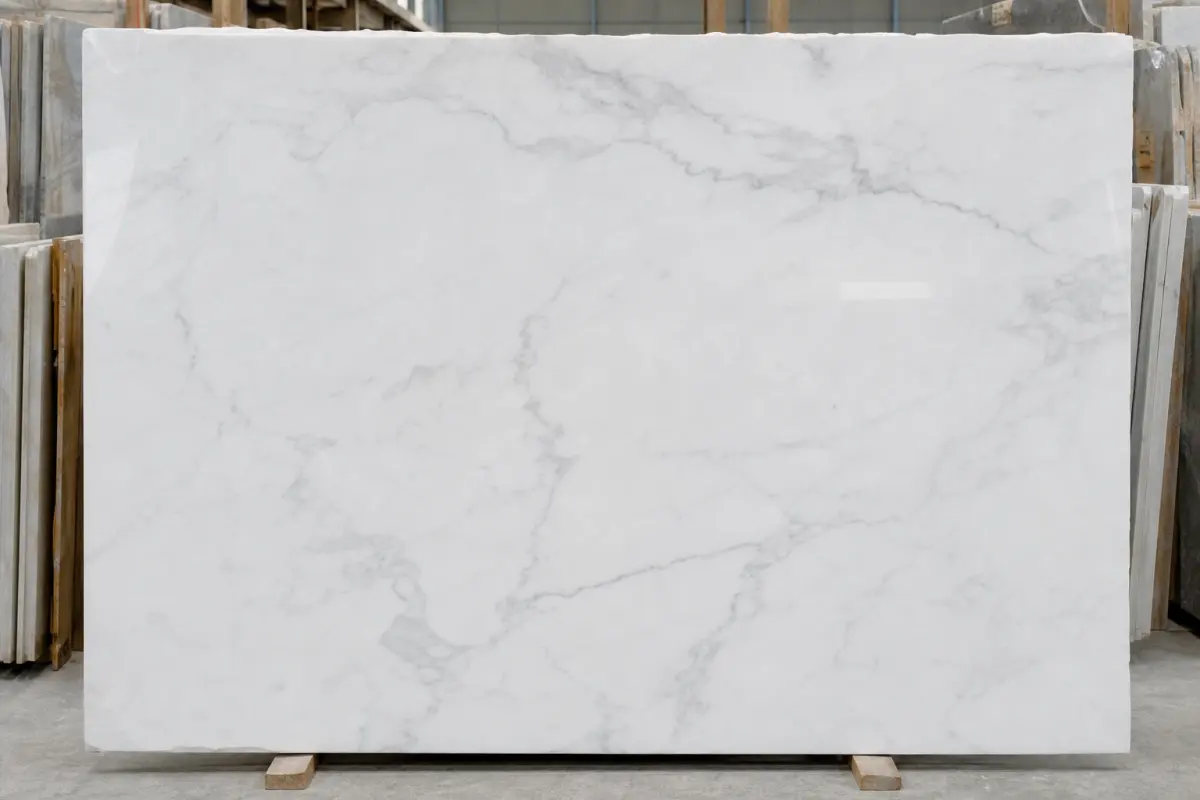
Compare live factory offerings on Buner white marble tiles 60×60 listings and cross-check against slab alternatives when rooms mix formats—lobby slab plus guest-room tile is normal, but shade must be managed across products.
Finish: polished, honed, and edge detail
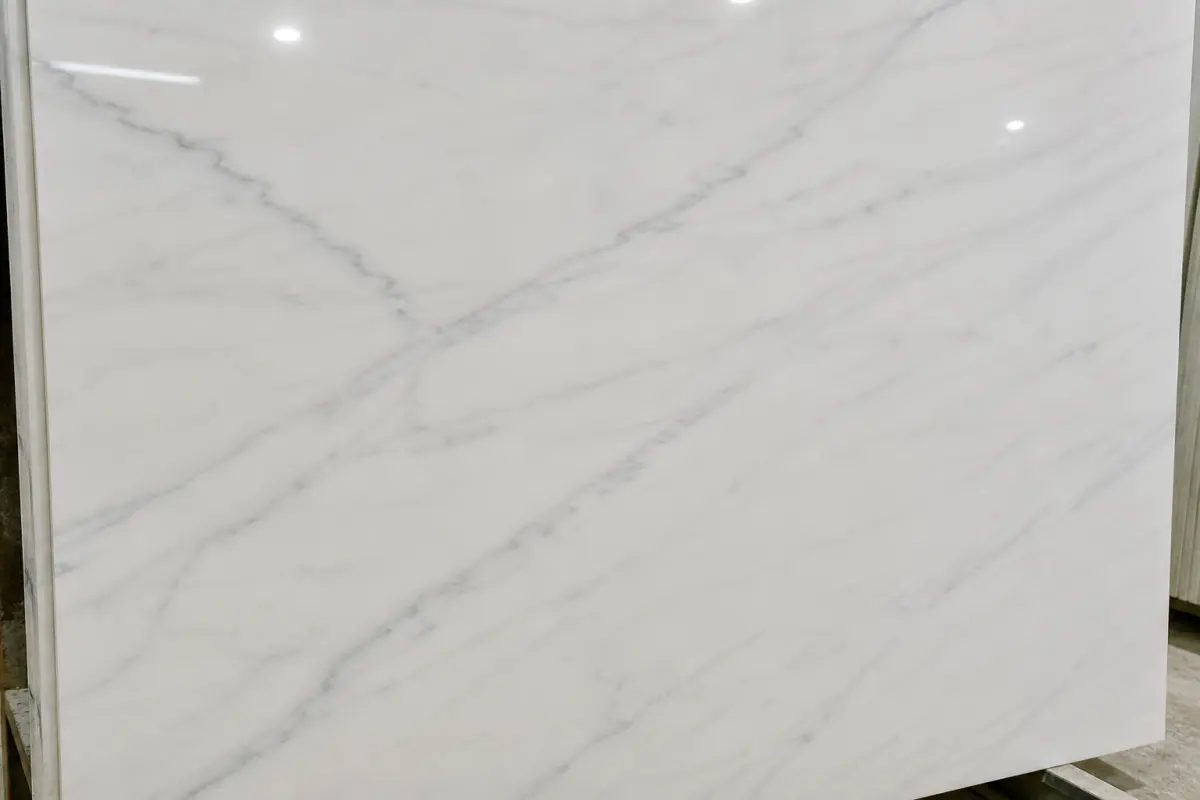
Polished 60×60 remains default for lobbies and halls where reflectance matches slab areas. Honed tiles suit bedrooms, corridors with glare concerns, and some mosque programmes. Bevelled edges reduce chipping in transit; specify bevel width if your fixer expects it. Anti-slip treatments are not universal in Buner—if you need them, state test method and value in the RFQ rather than assuming factory stock.
Calibre, shade sorting, and packing
Calibre grouping (length/width/thickness within a batch) determines whether a fixer hits rhythm on large floors. First-quality sorts may limit shade movement; commercial sorts allow wider clouding—acceptable in back-of-house, risky in a small villa. Carton marks should tie to factory lot IDs; export pallets need corner protection and strapping suited to Karachi port handling.
Shade continuity between tile and slab orders requires planning: some mills can cut tiles from the same block as your lobby slabs if you order early enough; others tile from stock blocks with different benches. Ask explicitly.
Factory pricing logic—not mystery markup
Raw material: Super-white and tight-selection whites cost more in block and royalty than grey Badal families used for corridor tiles. Yield: Tile lines recover differently from slab gangsaws; small format wastes corners but sells higher per ton when sorted well. Line time: When load shedding cuts polish hours, tile backlog competes with slab export—see electricity in Buner marble factories.
Tax and invoices: Phased sales tax on erstwhile PATA industrial supplies applies to factory output; price sheets from 2024 may be stale—use factory tax research for context. Volume tiers: Container-scale tile programmes beat small pallet orders on per-square-metre ex-mill, but only if calibre and shade rules stay fixed.
Logistics: Tiles ship cartons; slabs ship A-frames. Trucking to Karachi and port handling differ; importers should compare landed cost, not ex-factory tile price alone.
When tiles beat slabs on the BOQ
- Large repetitive floor areas in hotels, hospitals, and apartment towers.
- Programmes where fixer labour prefers modular formats and dry-layout speed.
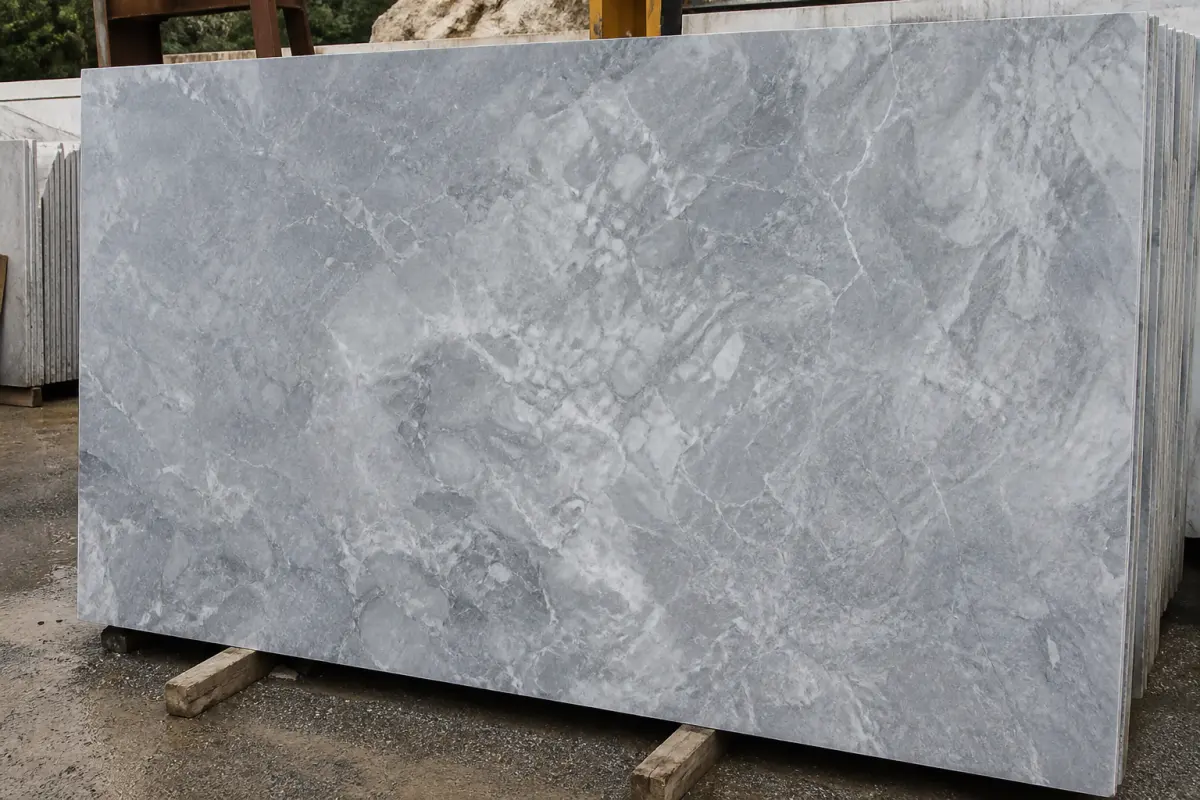
- Mixed grey corridor plus white room pattern using Badal grey and white tile SKUs.
- Domestic projects with tight site access where slab handling is costly.
RFQ tiles with slab discipline
Publish thickness, finish, calibre class, allowed shade variation, total square metres, and delivery city on the StoneVaults marketplace. Attach room-type map if shade bands differ between public and private areas. Factories that actually run tile lines respond with carton counts and lead times; slab-only job shops decline quietly—exactly what you want.
Buner 60×60 marble tiles are a factory product, not slab offcuts by default. Treat thickness, finish, and sorting as engineered specs, and pricing becomes explainable instead of negotiable mystery.
Installation expectations fixers raise
Marble tile needs flat substrate, appropriate adhesive for calcite, and movement joints at perimeters. Buner factories sell material, not installation—but BOQs that ignore lippage control create disputes. Specify whether you require double-burnishing at factory or on-site honing to uniform gloss. For wet areas, include waterproofing and seal schedule in the main spec, not as an afterthought addendum.
Carton breakage in transit shows up as chipped corners on first-quality sorts. Insurance and replacement carton policy should be in the supply contract, especially when tiles ride the same Karachi port handling as heavier slab crates.
Relating tile quotes to slab alternatives
When a lobby uses slabs and rooms use tiles, ask one supplier to price both from correlated blocks if timing allows. If not, accept that shade bands may differ and design transitions—border strips, pattern inserts—so the eye reads intentional contrast instead of mismatch.
Lead times versus slab export queues
Tile lines share polish capacity with slab export backlogs. During peak summer load shedding, tile orders may slip after slab commitments—confirm sequence on your purchase order. Rush tile programmes sometimes pay night-shift polish premiums; document that explicitly rather than treating rush as a favour.
Hotel operators ordering repeat replenishment should store factory lot codes from the first shipment so second-year tile buys match corridor colour. Without codes, even the same factory may ship a adjacent bench that reads “close enough” on sample but wrong across a full floor.